Birmingham’s Enterprise Zone: What It Covers and What It Funds
How the Enterprise Zone’s development sites and business rates mechanism fit together, with a distinction between completed works and projects described as future investment.
Published
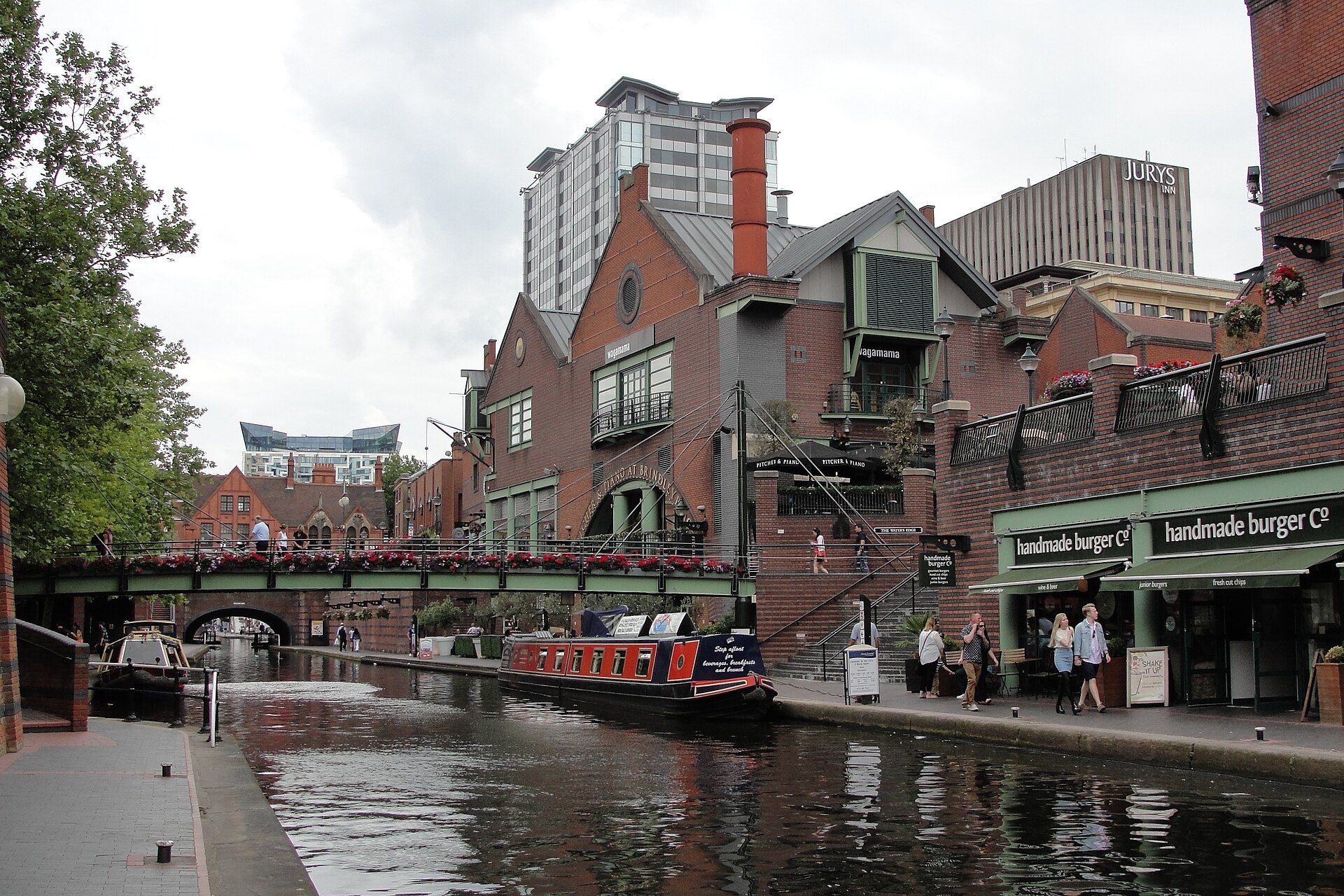

Birmingham’s Enterprise Zone is a collection of development sites across seven city centre clusters. Birmingham City Council’s overview explains that growth in business rates income from those sites is used to invest in projects and initiatives. The important distinctions are where the zone applies, how its funding works and whether a particular scheme has been delivered or remains a commitment.[1]
Where the Enterprise Zone Applies
The council’s 2024 overview describes the Enterprise Zone as covering 39 sites and 113 hectares of new and existing development space. Those figures refer to the Enterprise Zone sites. They don’t describe the whole city centre or the full area of Birmingham.[1]
The seven named clusters are Westside, Snow Hill, Eastside, Southern Gateway, Digbeth, Birmingham Innovation Campus and the Jewellery Quarter. These names provide a broad guide to the zone’s distribution, but the overview doesn’t supply a street-by-street boundary or a complete parcel list. A neighbourhood name alone is insufficient to establish whether a particular address falls within one of the sites.[1]
If you’re investigating a building or development proposal, ask the council for the relevant site boundary and confirmation against the address. Keep that boundary question separate from whether a particular project receives Enterprise Zone investment. The overview identifies strategic site investment, infrastructure and business support as investment areas, rather than promising funding to every business within a named cluster.[1]
Business Rates Growth Is the Funding Mechanism
The council says the zone uses growth in business rates income from its sites to invest in projects and initiatives intended to support economic growth and improve quality of life. Its explanation places early infrastructure investment at the centre of the programme, alongside strategic site investment and business support.[1]
That creates two questions worth keeping distinct when reading an announcement: how much income the programme expects to generate, and how much it has committed to a particular scheme. The overview also describes a balance between investment, borrowing and accelerating business rates growth through projects. A long-term income forecast cannot be read as an amount already spent.[1]
In its 2024 overview, the council expected business rates income growth up to March 2046 to exceed £2 billion. This is a forward-looking figure for the Enterprise Zone programme over that period. It doesn’t establish a grant pot currently available to individual businesses or the remaining budget for a specific development.[1]
What the Council Describes as Delivered
The council’s 2024 delivery account gives several examples of Enterprise Zone investment. Read its project descriptions as a record of what the council reported then, particularly where the same page mixes completed works with projects still being developed.[2]
Paradise and the Centenary Square Connection
For Paradise, the city centre development, the council describes phase one as complete. It identifies One and Two Chamberlain Square, with office and retail space and surrounding public space, as the delivered elements. The same account describes phase two as underway, so the completion statement applies specifically to the first phase.[2]
The account also identifies the Metro extension to Centenary Square as an investment example, describing a direct connection between Birmingham New Street and Centenary Square. The redevelopment of Centenary Square itself is listed separately. These examples show the programme funding transport connections and shared public spaces as well as supporting development sites.[2]
Snow Hill Streets and Southside Public Space
Around Snow Hill, the council describes public space and highway improvements in the Colmore Business District, linked to the station’s redevelopment. Its account reports improvements to pedestrian, cyclist and public transport access to Snow Hill Railway Station and the immediate area.[2]
In Southside, the account describes the conversion of a section of Hurst Street from a highway corridor into a pedestrianised public events space. It lists replacement paving on upper Hurst Street and Hill Street, the rainbow feature in Hippodrome Square and vehicle mitigation measures. These are specific local works within the investment programme, rather than a claim about changes across the entire district.[2]
Future Commitments Need Their Own Progress Check
For the area around HS2 Curzon Station, the council’s 2024 account describes further development and regeneration intended to improve access to Digbeth, encourage investment and enhance public space. It sets out intended improvements to walking and cycling connections and the station’s surrounding public spaces.[2]
Those statements describe the project’s purpose. They don’t establish that every element is complete today. The same caution applies to Paradise phase two: its description as underway belongs to the council’s 2024 account, rather than a current construction update.[2]
How to Read the Next Funding Announcement
Start with the named site or scheme, then identify what the funding pays for and whether the announcement describes a proposal, work in progress or completed delivery. If an address or investment decision matters to you, request the site boundary, the relevant funding decision and a current progress record. Those details will resolve questions that a cluster name or programme-wide forecast leaves open.[1][2]
Sources and checks
These sources were used for this article. Availability, prices and service details can change after the stated check date.
- About the Birmingham Enterprise Zone | Birmingham Enterprise Zone | Birmingham City Council
Checked 20 October 2026.
The council’s 2024 overview describes the Enterprise Zone as 39 sites covering 113 hectares of new and existing development space. The seven named clusters are Westside, Snow Hill, Eastside, Southern Gateway, Digbeth, Birmingham Innovation Campus and Jewellery Quarter. The overview does not provide street-by-street boundaries or a complete parcel list. The programme uses business rates income growth from the sites to invest in projects and initiatives. Its stated investment areas are strategic site investment, infrastructure and business support. The programme describes balancing investment, borrowing and business rates growth. The council’s 2024 projection expected more than £2 billion in business rates income growth up to March 2046. The projection is not evidence of expenditure already made, a current individual business grant offer or a scheme’s remaining budget. Requests for address-level boundary and funding confirmation are editorial guidance based on the overview’s limits.
- Enterprise Zone impact and delivery | Birmingham Enterprise Zone | Birmingham City Council
Checked 20 October 2026.
The delivery account lists Paradise, the Metro extension to Centenary Square, Centenary Square redevelopment, Snow Hill public space works, Southside public space works and HS2 Curzon Station surroundings as Enterprise Zone investment examples. It describes Paradise phase one as complete, delivering One and Two Chamberlain Square with office, retail and public space. It describes Paradise phase two as underway, without establishing present progress. The Metro investment is described as creating a direct connection between Birmingham New Street and Centenary Square. Snow Hill works concern streets and public spaces in the Colmore Business District linked to station redevelopment. The account reports improvements to pedestrian, cyclist and public transport access around Snow Hill Railway Station. Southside works include a pedestrianised events space on part of Hurst Street, paving on upper Hurst Street and Hill Street, the Hippodrome Square rainbow feature and vehicle mitigation measures. The Curzon project description sets out intended regeneration, Digbeth access improvements and walking, cycling and public space enhancements. The supplied delivery page identifies its last update as 2024, so its progress descriptions are treated as historical rather than current completion evidence.